 Illuminati Agenda 21 tells the story of the age-old battle between Good and Evil. The first part of the tale identifies the Luciferian perpetrators, tracing their origins back to ancient Sumeria, and tracking their hegemony over mankind through Babylon, Egypt, the Holy Roman Empire, and on to their modern-day lair known as The City of London.
Part two brings the battle into recent times, where the Illuminati’s Agenda 21 is quietly unfolding in an insidious creep towards global fascism and their long-awaited goal of a New World Secular Order, which threatens to strip us of our humanity, replace us with machines, and destroy all Creation.
I hope you will take a few minutes to check out this latest book, which I co-authored with my husband, Dean Henderson – a brilliant political analyst and economist and a noted international author and speaker. While some of my readers may find this book a bit out of the norm for me in terms of subject matter, it delves deeply into those things that I hold dear, such as alternative healing, organic gardening and farming, real food, GMOs and seed saving, as well as my reverence for nature and the spirit of being human.
All of these things and much more are portrayed both in my writing and in this new book, which uncovers what many people in these troubled times feel in their gut – that the system is broken and that the powers that be don’t seem to care all that much about our, or anyone else’s suffering so long as they stay rich and powerful…
So if you are literally sick and tired and want to find out why, step inside and find out the truth that is being hidden from us and what you can do to change the world for the better.


 It’s been quite a while since I wrote something new for Show Me Oz and I’d like to say ‘thank you’ to everyone who has visited and signed up to follow my blog over the last few years even though I have not posted as much as I would have liked. Back in 2019, I was writing full time for Acres USA magazine and contributing to Llewellyn’s Herbal Almanac when we decided to make a move to the Black Hills of South Dakota, partly to escape the excessive labor of the farm and partly to be closer to my husband’s side of the family.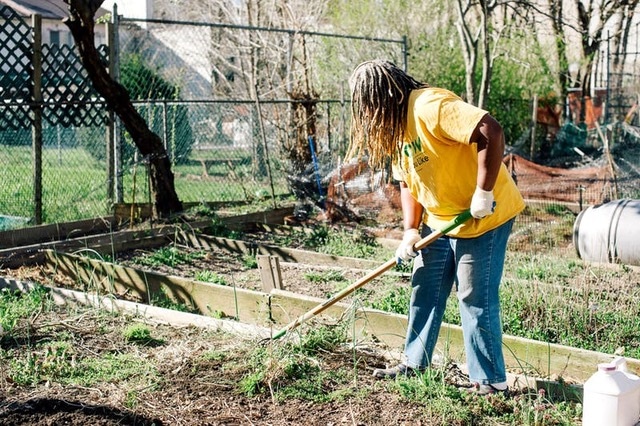


 by Jill Henderson
 by Jill Henderson


 When I first saw Burger King’s advertisement for the Impossible Burger, my stomach did a triple somersault. This is because I have been following the development and deployment of this Franken-food with disgust for the last couple of years and the last place I expected it to ooze to the surface was at one of the world’s leading processed fast food chains. Burger King has gone above and beyond to make this genetically modified bacteria burger sound like a super-yummy healthy alternative to meat, but when you learn the truth, your stomach will lurch, too.
 If you’ve been following my blog for any length of time you already know that I am passionate about organic and sustainable agriculture. When I’m not blogging, I write articles for Acres USA, a fantastic magazine for ecological, sustainable, and organic farmers. This article, How Farmers Can Fight Climate Change, is not only interesting, but filled with valuable information for anyone who grows food in this unpredictable new world.
 You may have heard one of my recent interviews on the dangers of electromagnetic frequencies, particularly those of the new 5G cellular network. There is a growing body of evidence that proves that the radio frequencies that have been used for 4G and LTE networks, and particularly the new spectrum of pulsed-frequency millimeter waves, can and do produce devastating effects on the body. Today, I want to share with you just one document that specifically addresses those concerns. The Naval Medical Research Institute published this research paper way back in 1971. It is a “Bibliography of reported biological phenomena (‘effects’) and clinical manifestations attributed to microwave and radio-frequency radiation”. It includes 5 pages of physical effects to the human body that will shock even the most robust EMF denier. The title says it all. You can read more about the dangers of EMFs from our own government’s researchers and download the original document as a PDF from my article,


 Jill Henderson


 Jill Henderson
 Jill Henderson


 ill Henderson
 Jill Henderson


 Jill Henderson

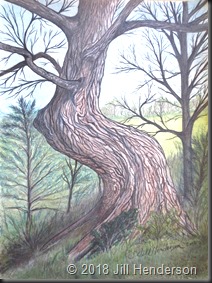 I wanted to share a pastel portrait I recently did of a very special tree for a very special client… Read more about this amazing tree on my art blog,
  Jill Henderson
 Jill Henderson
 An important documentary for anyone who cares about the sanctity of one-person-one-vote and Big Money corporate rigging of US elections that thwart the voice of the people. I witnessed much of this while in my one-time home state of Montana – and it’s going on in every state in America. Check out this
  It’s surprising how many people completely reject the idea that they might have intestinal parasites when the truth of the matter is that hundreds of millions of people in America alone have some form of parasite living inside their bodies. In last week’s post, I talked about what parasites are and how they can affect human health. I also posted a very short list of ingredients and a super easy recipe for black walnut hull tincture, which together, make up one of the most effective, simple, natural, and inexpensive parasite cleanses you can do at home. And this week, I’m giving you the entire protocol schedule so you can make the most of this wonderful parasite cleanse.


 Jill Henderson
 Jill Henderson




 by Jill Henderson

![2012 8-29 Seedlings (4)_thumb[7]](https://showmeoz.wordpress.com/wp-content/uploads/2013/02/2012-8-29-seedlings-4_thumb7.jpg "2012 8-29 Seedlings (4)_thumb[7]")
 I had a super fun time being interviewed recently by Juice Guru, Steve Prussack. We talked about common seed saving mistakes, the differences between GMO, hybrid and heirloom seeds, why saving seed is an important aspect of healthy living and a critical component of any disaster preparedness plan; what botanical maturity has to do with saving seed; sprouting seeds for food and more! Saving seed is so easy, anyone can learn how in less than 50 pages using my book, The Garden Seed Saving Guide!

 Jill Henderson ~
  Jill Henderson
 Jill Henderson
 Jill Henderson

 Jill Henderson


 Jill Henderson
 Jill Henderson
 Jill Henderson
 Jill Henderson
 Jill Henderson
 Jill Henderson


 Show Me Oz